transmedia ted

Awaken the cyborg in you

February 17, 2013

Last year, at TED Global, I met my first cyborg, Neil Harbisson. Born in Northern Ireland and raised in Catalonia, Neil is a contemporary artist, composer, and cyborg activist who is best known for his self-extended capacity to perceive colours outside the range of human vision.

Born with a condition called “monochromatism”, he wears a prosthetic device – which he calls an “eyeborg” – that allows him to hear audible conversions of the colour frequencies that the human eye cannot see.

Until his encounter with cybernetics expert Adam Montandon, Neil was an artist who lived in a black and white world.

Now, thanks to his prosthesis – a narrow, flexible arm that ends with an eye-like apparatus starting from the top of his head and ending at his forehead – Neil can ‘hear’ colours; sometimes, like when he contemplates a Picasso painting, the sounds of the colours merge to form a synesthetic symphony.

I became interested in the cyborg world last year, when I got the opportunity to read the works of Amber Case, a Canadian anthropologist who studies the interaction between humans and computers and how our relationship with information is changing the way cultures think, act, and understand their worlds. Amber believes that humans are already low-tech cyborgs because we spend most of the day connected to machines such as cars, computers, telephones, radios, TVs, and so on.

The word “cyborg,” short for “cybernetic organism”, describes a living entity that has been augmented with exogenous components in order to adapt to new environments. By definition, the entity must contain both organic and inorganic elements.

But we are not only cyborg. Today, humans are altering the course of evolution; we are increasingly shaping our environment and ourselves as well as other species. Today’s world is one in which the human body harbors 100 times more microbial cells than human cells, where a gene cocktail can allow almost anyone to climb an 8,000 meter peak without oxygen, and where—given the right drug—one could have a 77% chance of becoming a centenarian. (Juan Enriquez, Homo Evolutis)

My question is whether or not this “nanoscience society” imposes a physical and mental standard on individuals? If human self-modification – known as “modding” – transcends sex, age, race, physical health and even death, can we still call this individual “human”?

And where does media fit in?

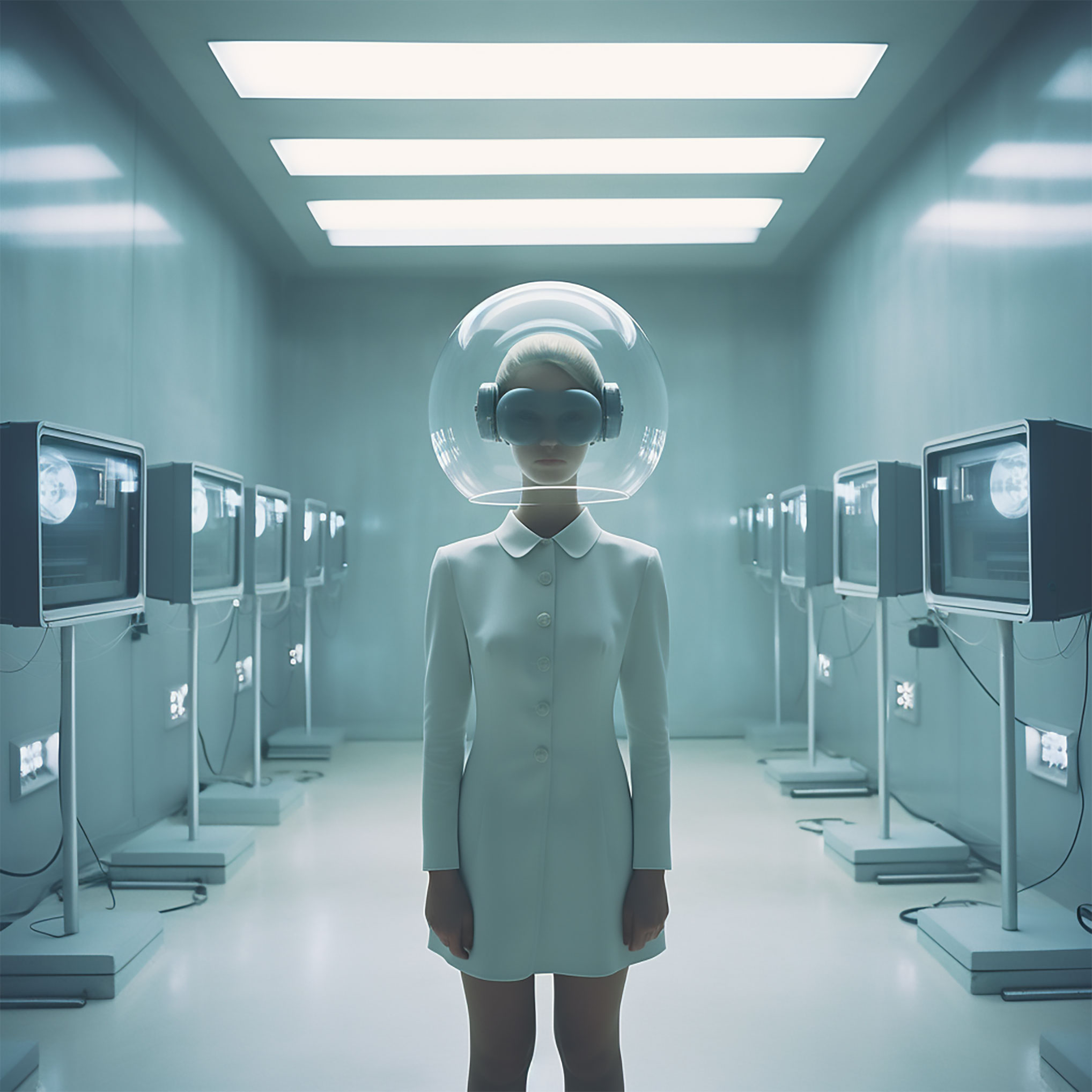
For more than a decade we have been promised a world of devices and services delivered into everyday life and personalized based on the situation being experienced at a given moment. And here we are, where communication technology has shaped a world in which people carry small, powerful, wireless devices that are connected to the internet almost all of the time from almost anywhere, making Media ubiquitous.

Being permanently connected enables the development and delivery of targeted, personalized content. It’s called Pervasive Media, which is basically any experience that uses sensors and/or mobile/wireless networks to bring you content (movies, radio, TV, music, pictures, games, and so on) that’s sensitive to your situation, which could be where you are, who you’re with or how you are feeling.

In this context, what role will media play when, for example, smart /connected TV is standard? What if a broadcaster transmitted a regular TV program and, using a smart TV, could modify the content on the fly for each of us based on feelings, moods or shared private moments, in a word, modifying our cognitive behavior?

Will media become a protagonist in this era of subliminal cognitive manipulation? What will be the role of public service media in this scenario? Can public service media be the guardian that delineates the ethical parameters of pervasive media?


(Photo: James Duncan Davidson /TED Blog)

Transmedia arrives at the BAFTA!

December 20, 2012

I was invited to be one of the jurors at Pitch Up! at BAFTA, a crossmedia/transmedia pitching session taking place in the home of the famous British Academy of Film and Television Arts (BAFTA), an organization which supports, promotes and develops the art form of the moving image film, television and video games—by identifying and rewarding excellence, inspiring practitioners, and otherwise benefiting the public.

Pitch UP! at BAFTA, co-produced by BAFTA and Stellar Network, is the first non-linear storytelling experiment for BAFTA, and finally seeing transmedia take the stage is a relief.

Transmedia is an approach to story delivery that aggregates fragmented audiences by adapting productions to new modes of presentation and social integration. The execution of a transmedia production weaves together diverse storylines, across multiple outlets, as parts of an overarching narrative structure. These elements are distributed through both traditional and new media outlets (Seize the Media)

The ugly term “transmedia” has been accepted not only by Hollywood (when the Writers Guild of America decided to coin a new working profession called the transmedia producer, but also by the British establishment (BAFTA). There’s no turning back anymore, and even if it isn’t worthwhile or necessary to apply transmedia strategy to every project, the opportunity to extend the narrative in order to engage all audiences with a well-structured and well-planned transmedia echosystem can result in the significant reward of brand promotion and an increasingly engaged audience.


Homo Sapiens is born with the instinct to tell stories, and transmedia is about storytelling, especially as it involves multiple platforms tied together to create an immersive story experience.

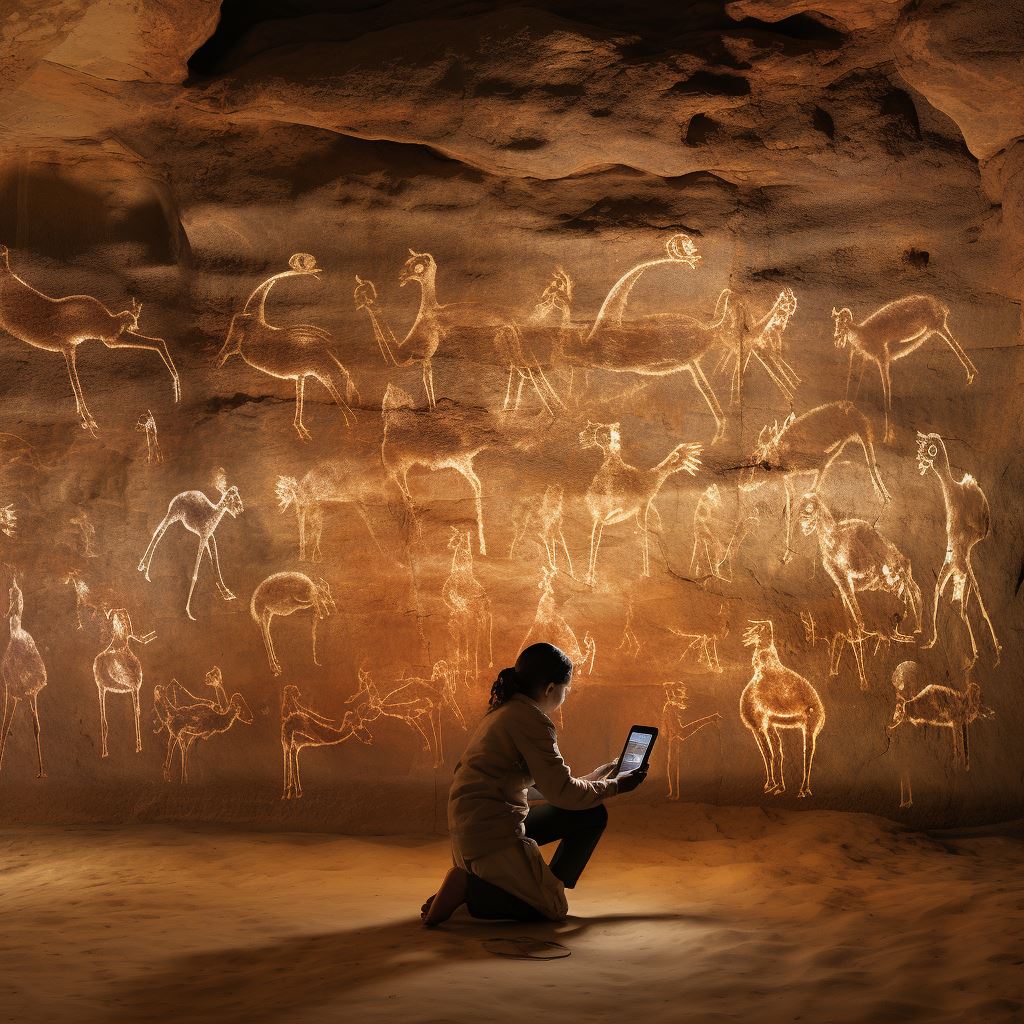
While the term “transmedia” is new, the practice is not. People have been telling stories across multiple, diverse platforms for thousands of years. It started when people began to paint what they saw via paleolithic cave paintings, probably sometimes after they began sharing stories orally. As humankind became more civilized, they began writing stories, and then technology flourished.

Writers have long been engaged in the creation of worlds that go beyond the page. In 1900, for example, L. Frank Baum’s novel The Wonderful Wizard of Oz was adapted into a musical, and the story was expanded in several other books.

The first known transmedia exercise where a story is spread across multiple media platforms probably occurred in religion. Some good example are the Bible and the Koran—religious texts which have been transformed into pictures, tapestries, cloisonné windows, word of mouth, prayers, prayer beads, songs, live events, etc. and all with the same story to extend and experience.

Today’s documentary filmmakers using transmedia can not only reach new audiences, but they can also create unique educational components to enhance their documentary’s message and provide a stronger meaning to their story.

Entertainment can also easily make use of transmedia by creating interesting parallel stories related to the main project but delivered through a variety of different media and presented to a much larger potential fan base than the one previously engaged via a single storytelling medium.

Even news can take advantage of immersive storytelling. Transmedia can give news the opportunity to verify sources, to extend the context of a story, and to enlarge the information context. The most interesting ingredient in transmedia journalism is social media, which plays a powerful role in shaping news stories, making news reports nearly instantaneous, affecting how news is covered, and increasing the effect news has on society.

Expert communicators, content developers, and broadcasting professionals should embrace this trend, where the transmedia writer is the versatile Swiss Army Knife who can create his/her narrative with several tools in a single “property” thereby becoming an orchestra director who masterminds his/her “musicians” (web developers, engineers, game designer, writers, and social media managers) and their “music” (the transmedia content).

In my opinion, a good, subtle transmedia strategy is difficult to create; you have visionaries, cult leaders (and their cultists), authors, skeptics, disbelievers, dreamers, and techies, but it’s still a small community where Public Service Media is making its entrance with great projects like SWR Alpha 07, the BBC Sherlock and, of course, Dr. Who.

Nonetheless, by using transmedia strategy, Public Service Media has the opportunity to reach all audiences and to aggregate new, powerful, and proactive communities that—if strategically supported and guided—can do the world good and promote change.

To know more, here


(transmedia picture: Le blog de NOP)

transmedia ted transmedia ted transmedia ted transmedia ted transmedia ted